Two clinicians covering all three bases.
Pitch Count Portal · Serial Ultrasound · PT Exam
PitchSight pairs a baseball physical therapist with an ultrasound specialist to see arm stress before it becomes an injury. Josh Ostrom built the seasonal monitoring protocol; Peter Aguero performs the imaging. Together they give players, parents, and coaches objective data at every stage of a throwing season.
Source: Tommy John rate — J. Roegele Tommy John Surgery List, 2025 season, share of pitchers who appeared in MLB or spent the season on the MLB injured list.

Meet the team.
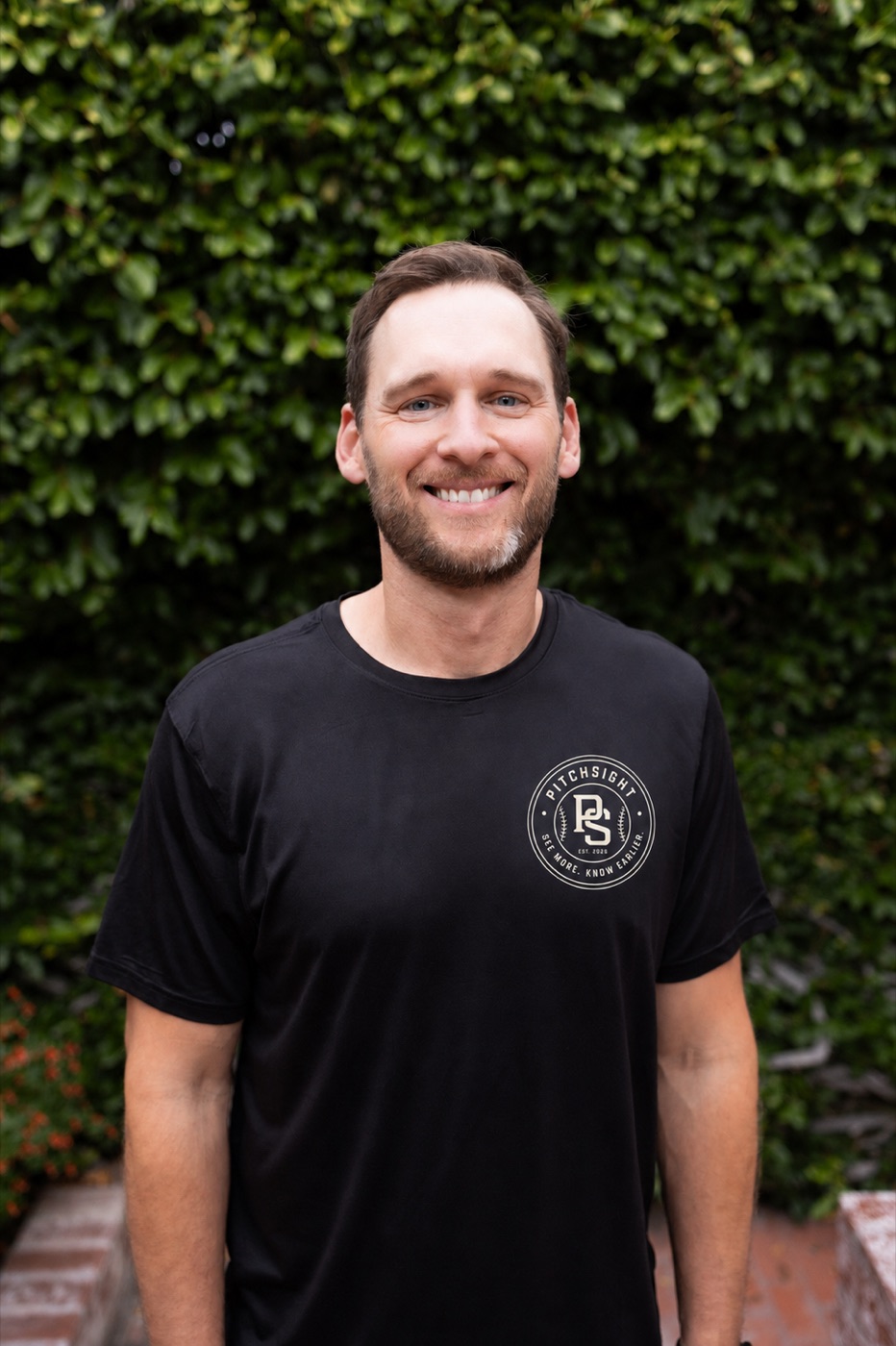
Josh Ostrom.
PT, DPT, SCS, CSCS, TPI
A decade of sports medicine experience working with athletes at every level — youth, high school, collegiate, and professional. Josh has worked with several Major League Baseball players, performed range-of-motion measurements at the 2022 MLB Combine, and spent several seasons as a physical therapist in professional hockey with the San Diego Gulls. He specializes in baseball, golf, and ACL rehabilitation. A former college shortstop and pitcher, he brings a firsthand perspective to his passion for reducing overuse injuries in youth athletes — particularly Little League elbow and shoulder.
- —Board-Certified Sports Clinical Specialist
- —Certified Strength & Conditioning Specialist
- —Titleist Performance Institute Certified
- —Baseball Injury & ACL Rehabilitation Expert
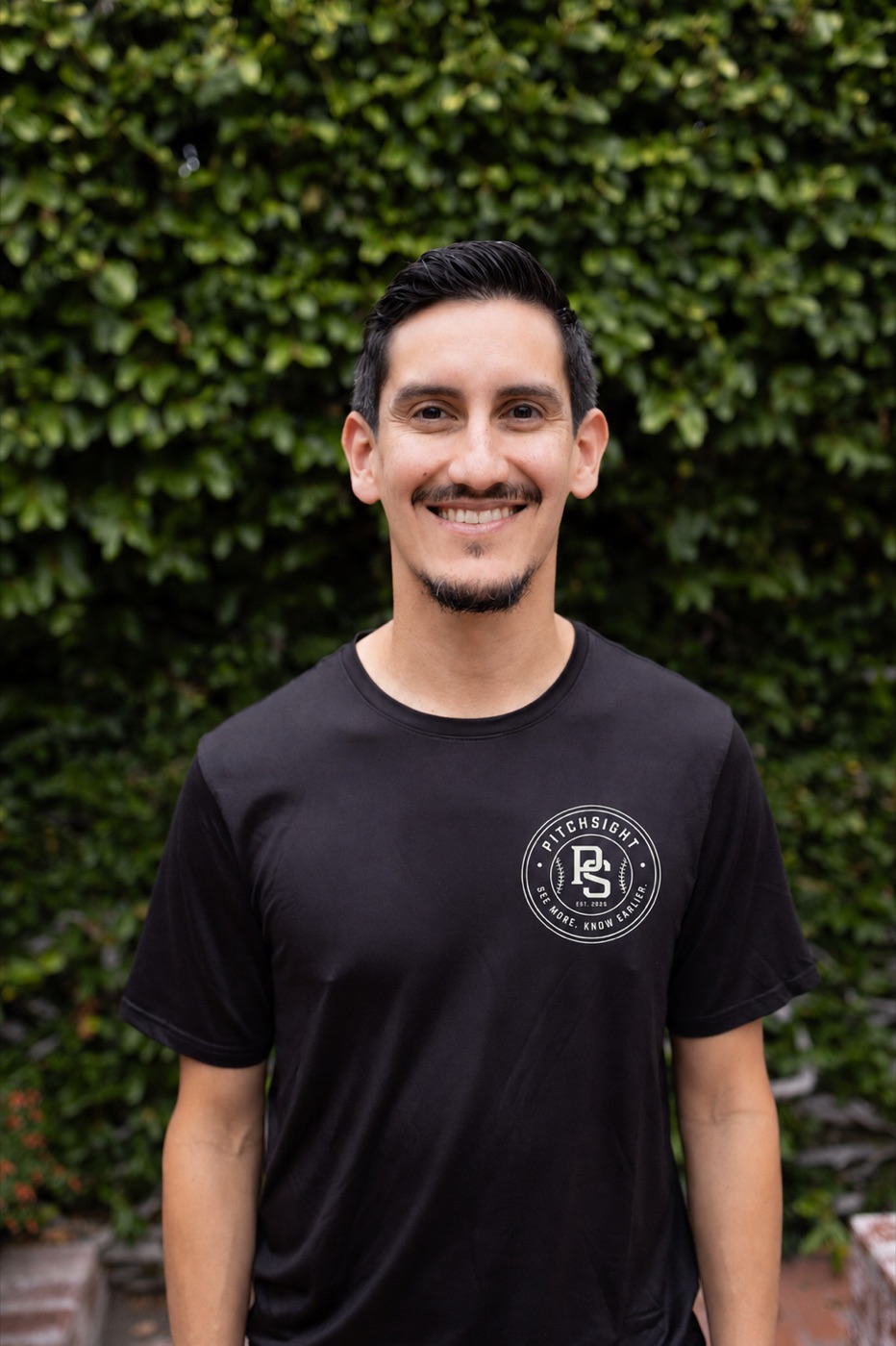
Peter Aguero.
PT, DPT, RMSK
Peter is a licensed physical therapist with over a decade of experience and a specialized focus in diagnostic musculoskeletal ultrasound. One of the few physical therapists to hold RMSK® certification in musculoskeletal sonography, he brings a level of imaging detail beyond what a standard clinical exam can show. He is an internationally recognized educator, keynote speaker, and published author in the field of medical imaging.
- —RMSK® — Registered in Musculoskeletal Sonography
- —Internationally Requested Educator
- —Published Author, Medical Imaging
- —Diagnostic Ultrasound Specialist Since 2019
Pain is a lagging indicator.
The game has never been better at building velocity — players are bigger, faster, stronger, they have better sequencing, and more efficient mechanics. They are also over-stressing their tissues with year-round pitching and early sport specialization. And nobody was tracking how the tissue responds within the context of the workload and how they present on a baseball-specific physical exam.
Ultrasound is convenient, can travel to you, and can see how the structures in the elbow react to dynamic stress.
Arm care is a whole-body problem, and it plays out across a season, not in a single visit. PitchSight monitors the throwing arm through pre-season, in-season, and post-season — so decisions about load and rest are made from the exam and the data, in the context of where the athlete is in the season.
How to protect the player's arm.
Follow pitch count rules. Every league sets limits on pitches per game — make sure they're followed, including across multiple teams or private pitching coaches. All high-intent pitches add to the stress on the player's arm, so coaches should communicate about workloads.
Ensure proper rest. After pitching, the player needs rest days before throwing again. The number of rest days depends on how many pitches were thrown — see USA Baseball / Pitch Smart guidelines.
Take time off. Young throwers should take at least 3 months off from high-intent throwing each year. Pitching year-round substantially increases injury risk.
Don't play through pain. Elbow pain during or after throwing — especially on the inside of the elbow — is a warning sign. Consider getting an evaluation with a sports-medicine PT or physician.
Watch total volume. Playing on multiple teams increases total throwing volume and injury risk — make sure coaches and parents communicate.
Play multiple sports. Cross-training builds overall athleticism and reduces the likelihood of overuse injury.
Build overall fitness and mechanics. Strong legs, core, shoulders, and forearms help protect the arm. Proper mechanics — using the lower half of the body to create velocity — along with a regular arm-care (shoulder and forearm strengthening) program have been shown to reduce stress on the elbow in young pitchers.
Use the Pitch Count Portal. Track pitch counts and your Acute:Chronic Workload Ratio (ACWR) — your 7-day workload compared to your previous 28-day average. Research shows that outside the 0.7–1.3 range, injury risk increases. Track velocity, tissue response, and more, and share with coaches across multiple teams, private pitching coaches, trainers, and healthcare providers.